


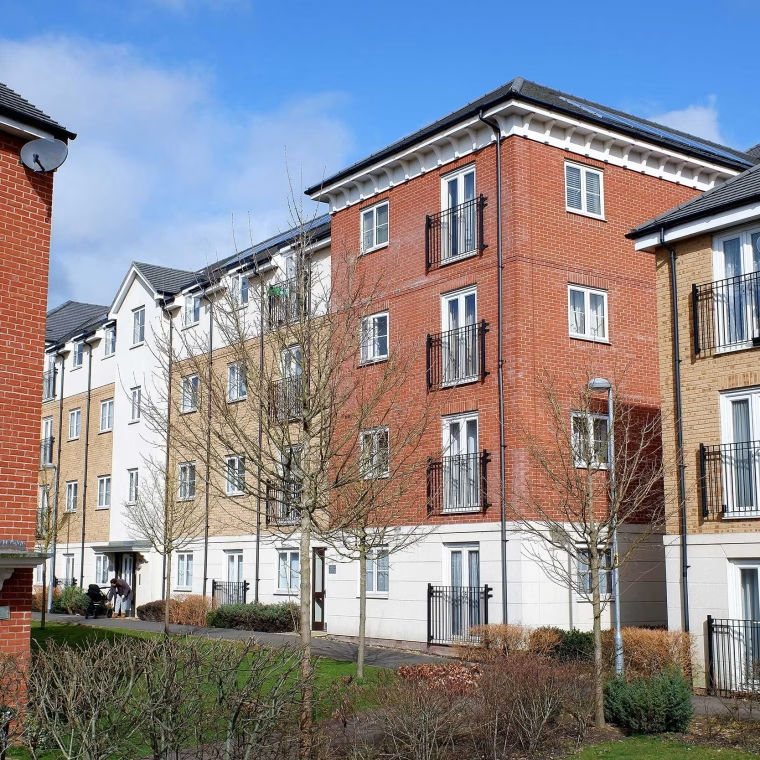

The word comes from the French term meaning ‘little house’, which neatly captures what makes a maisonette distinctive in the UK property market. Whether you are buying, renting, or considering home improvements, understanding exactly what a maisonette is will help you make more informed decisions about the property.
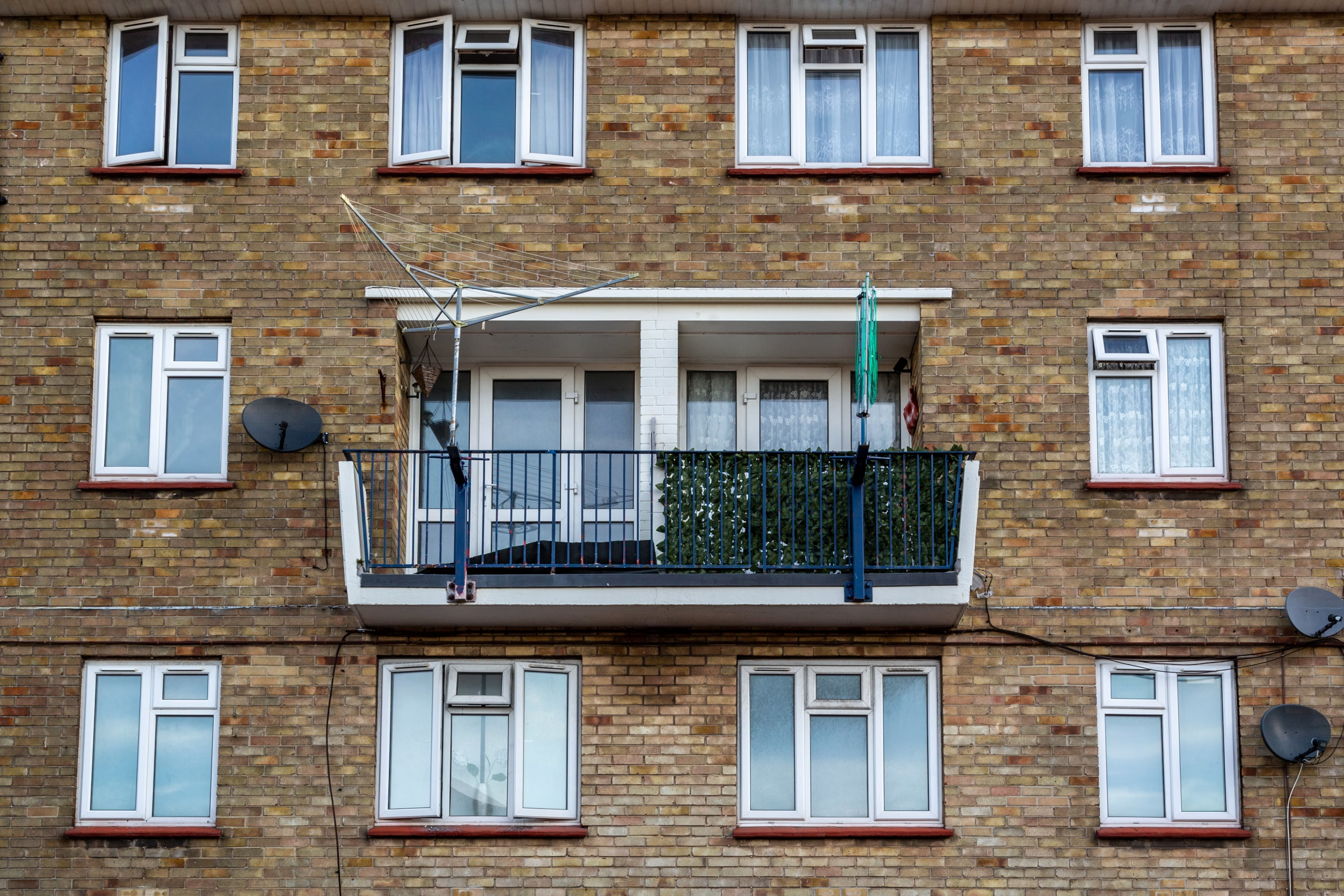
🧩 What Is a Maisonette?
A maisonette is a self contained home spread across two or more floors, located within a larger building that contains at least one other dwelling. It operates as a fully independent unit, with its own kitchen, bathroom, and living spaces, but it shares the overall structure of the building with other residents.
The word ‘maisonette’ is derived from the French word for ‘little house’ a fitting description given that the multi floor layout gives occupants a far more house-like living experience than a conventional flat. The term has been used in UK property for well over a century and remains in common use today across estate agents, conveyancers, and planning authorities.
The defining characteristic is the split across floors combined with a degree of self containment. A maisonette is not simply a flat that happens to be on two levels by quirk of layout, it is a property type in its own right, recognised as such in legal, planning, and mortgage contexts across the United Kingdom.
🧩 Key Features of a Maisonette
The most immediately recognisable feature of a maisonette is that it spans at least two floors. This multi storey layout sets it apart from a standard flat and is the single most consistent defining characteristic across all maisonette types. Inside the property, you will typically find a dedicated private staircase connecting those floors, which is entirely within the unit itself and not shared with neighbours.
Entrance arrangements vary, but a maisonette will generally have either a private front door opening directly onto the street or a shared communal entrance that leads to individual front doors for each unit. Where a maisonette has direct street-level access, the sense of independence from the rest of the building is particularly strong. Even where a communal entrance exists, the individual front door of the maisonette marks the boundary of the private home.
Other common features include the unit’s own utility meters, its own letterbox, and in some cases access to a private outdoor space such as a garden or terrace. These characteristics combine to give maisonettes a practical independence that many residents find attractive, particularly those transitioning from a house but constrained by budget or location.
Have any questions?
Contact the experts today!
🧱 Types of Maisonettes in the UK
Ground-floor maisonettes occupy the lower levels of a building, often incorporating a basement or lower ground floor alongside the raised ground floor. They frequently come with direct access to a garden, which is one of their key selling points. Upper floor maisonettes, by contrast, are positioned higher up in the building, sometimes across the top two floors, and may benefit from better natural light, elevated views, and reduced street noise.
Split-level maisonettes are a variation where the floors are not arranged in a straightforward stacked configuration. Instead, the living spaces are staggered across half levels, creating an interesting internal layout that can feel spacious and architectural, though it can also present challenges for furniture placement and accessibility.
In terms of construction, there is an important distinction between purpose built and conversion maisonettes. Purpose-built maisonettes were designed and constructed from the outset as multi-floor dwellings within a larger building, meaning the layout, soundproofing, and structural divisions were all planned accordingly. Conversion maisonettes, on the other hand, were originally houses or larger flats that were subsequently divided into separate units. Conversion properties can vary considerably in quality and layout, so it is worth assessing the building’s history carefully before purchasing.
💡 Maisonette vs Flat: What Is the Difference?
The primary difference between a maisonette and a flat is the number of floors the property occupies. A flat is a self contained dwelling on a single level, whereas a maisonette spans two or more floors with its own internal staircase. This seemingly simple distinction has a significant impact on the feel and practicality of day to day living.
Entrance arrangements also differ. A standard flat typically shares a communal entrance hall and relies on that shared space as the sole means of access. A maisonette may have a private front door at street level or on an external wall, which reduces the amount of communal space the occupant needs to pass through and can enhance the sense of privacy and security.
From a leasehold perspective, both flats and maisonettes are typically sold on a leasehold basis, meaning you own the property for a set period rather than owning the land and structure outright. However, the specific terms of the lease, the service charge structure, and the management arrangements can differ between the two property types. Because a maisonette occupies more of the building vertically, questions around responsibility for certain structural elements, such as intermediate floors and ceilings, may be addressed differently in the lease documentation.
💡 Pros and Cons of Owning a Maisonette
The primary difference between a maisonette and a flat is the number of floors the property occupies. A flat is a self contained dwelling on a single level, whereas a maisonette spans two or more floors with its own internal staircase. This seemingly simple distinction has a significant impact on the feel and practicality of day to day living.
Entrance arrangements also differ. A standard flat typically shares a communal entrance hall and relies on that shared space as the sole means of access. A maisonette may have a private front door at street level or on an external wall, which reduces the amount of communal space the occupant needs to pass through and can enhance the sense of privacy and security.
From a leasehold perspective, both flats and maisonettes are typically sold on a leasehold basis, meaning you own the property for a set period rather than owning the land and structure outright. However, the specific terms of the lease, the service charge structure, and the management arrangements can differ between the two property types. Because a maisonette occupies more of the building vertically, questions around responsibility for certain structural elements, such as intermediate floors and ceilings, may be addressed differently in the lease documentation.
Frequently Asked Questions About Maisonettes
Below are answers to the most common questions people ask when researching maisonettes in the UK property market. Whether you are a first-time buyer, an investor, or simply curious about this property type, these answers should give you a solid foundation.
What is a maisonette?
A maisonette is a self contained home that occupies two or more floors within a larger building. It has its own internal staircase and usually its own private entrance, giving it a house like feel distinct from a standard single storey flat.
Why is it called a maisonette?
The word ‘maisonette’ comes from the French term meaning ‘little house’. It was adopted into English property vocabulary to describe a dwelling that, while part of a larger building, functions as an independent, multi floor home.
What is the difference between a maisonette and a flat?
A flat occupies a single floor within a building, whereas a maisonette spans at least two floors and includes its own internal staircase. Maisonettes often have a private entrance, providing greater independence than a typical flat.
What is the difference between a maisonette and a house?
A house is usually sold on a freehold basis, with the owner holding the building and land outright. A maisonette is almost always leasehold, sits within a larger shared building, and involves service charges for the upkeep of communal parts and the wider structure.
Is a maisonette leasehold or freehold?
Maisonettes are almost always sold on a leasehold basis in the UK. This means you own the right to occupy the property for the term of the lease, while the freehold of the building is held by a separate owner.
Can you get planning permission to extend a maisonette?
It is possible to seek planning permission to extend a maisonette, but it depends on several factors including the type of maisonette, its position within the building, and the terms of your lease. A ground floor maisonette with garden access tends to have more options than an upper-floor unit, and lease consent from the freeholder is typically required alongside any planning approval.
Do maisonettes come with a garden?
Not always. Ground-floor maisonettes frequently have access to a private garden or outdoor terrace, which is one of their most appealing features. Upper-floor maisonettes are less likely to include a garden, though some may have a balcony or access to a communal outdoor space.
Are maisonettes a good investment in the UK?
Maisonettes can be a sound investment, often offering more space than a comparably priced flat and strong rental appeal due to their house like layout. However, leasehold considerations, service charges, and the remaining lease length all need to be carefully evaluated before purchasing.