


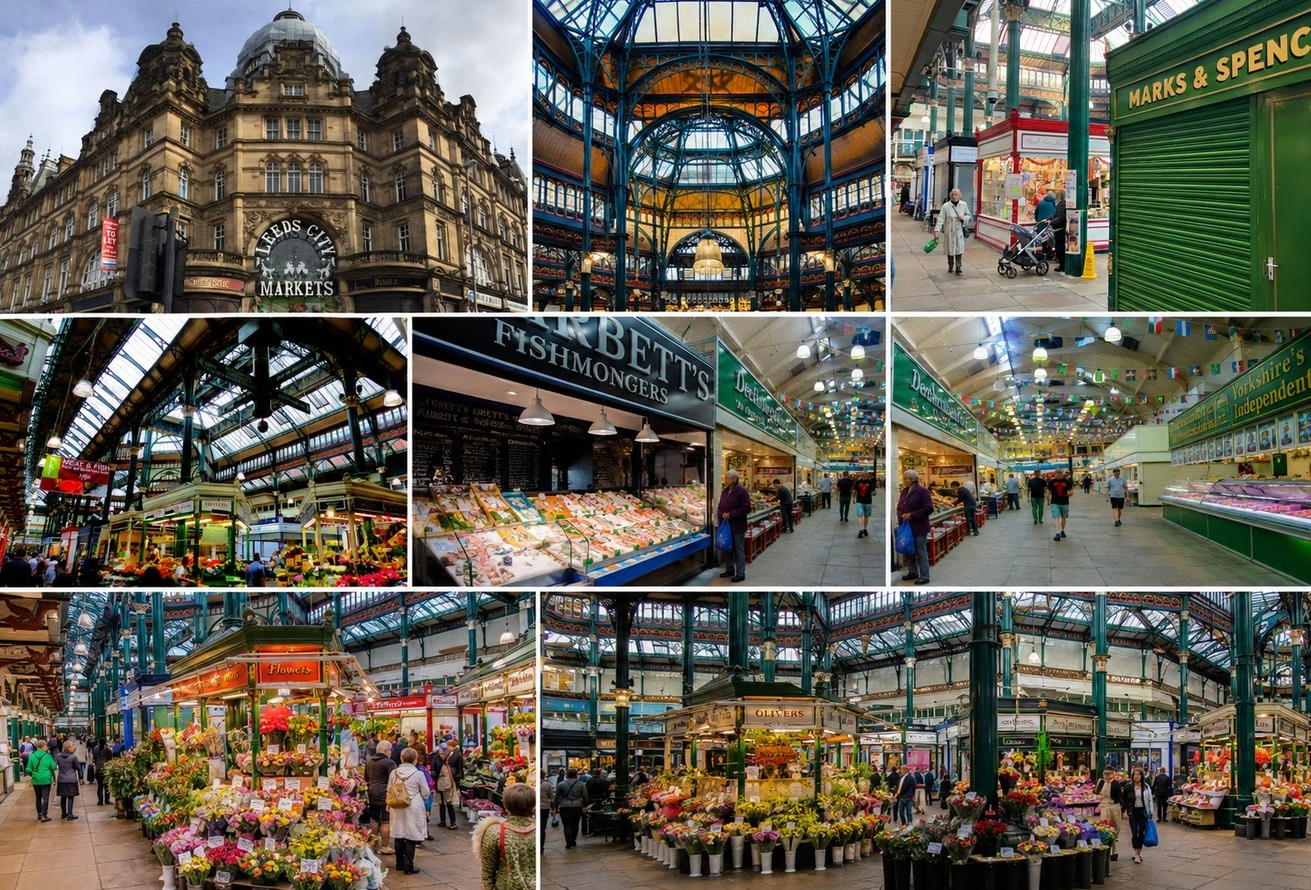

This guide covers everything you need to know: the market’s remarkable history, its layout and architecture, the traders who keep it thriving, the food on offer, and the practical details for planning your visit. If you’ve ever asked yourself what Kirkgate Market is famous for, or wondered whether it’s still open, you’ll find the answers here.
What Is Leeds Kirkgate Market?
Leeds Kirkgate Market, often called the Leeds city market, is a vast, covered indoor and outdoor trading space located in the heart of Leeds city centre. Spanning a substantial footprint between Vicar Lane, George Street, and Kirkgate itself, the market is generally cited as the largest covered market in Europe, with approximately 245 businesses operating across its halls and outdoor sections at any given time.
Beyond its sheer scale, Kirkgate holds enormous cultural significance for the city. It is a place where generations of Leeds families have done their weekly shop, where independent traders have built livelihoods, and where the spirit of the city, resourceful, warm, and unpretentious, is most honestly on display. The market is as much a community institution as it is a retail destination.
Kirkgate’s story is one of genuine resilience. It has survived fires, economic pressures, and the rise of out-of-town shopping, yet it continues to adapt, attract new traders, and draw visitors from across the region and beyond. That combination of heritage and reinvention is what makes it a true Leeds landmark.

A Brief History of Kirkgate Market Leeds
The origins of a market on this site stretch back centuries, with trading activity recorded in the Kirkgate area of Leeds long before the Victorian era. The market as we know it today has its roots in the nineteenth century, when rapid urban growth demanded a permanent, organised trading space for the expanding city.
The most celebrated chapter in Kirkgate Market’s history is its connection to Marks & Spencer. Michael Marks famously opened his original Penny Bazaar stall at Leeds Kirkgate Market in 1884, laying the foundations for one of Britain’s best-known retailers. A commemorative plaque on the market marks the spot, and the story is a source of enormous local pride. The market has also endured significant adversity: a devastating fire in 1975 destroyed much of the Grand Arcade section, leading to a major rebuild that shaped the market’s current layout.
Kirkgate Market’s heritage has been recognised at both local and national level. The 1904 market hall, with its distinctive glass and iron roof, is a listed building, and the market as a whole is considered one of Leeds’s most important historic assets. Its ability to evolve through rebuilds, changing retail trends, and shifting city priorities is central to its enduring identity.

Layout and Architecture: Getting Your Bearings
Kirkgate Market is divided into indoor covered halls and outdoor open stalls, giving it a layered character that rewards exploration. The main indoor section is anchored by the magnificent 1904 hall, whose soaring glazed roof and ornate ironwork create a light, airy atmosphere quite unlike a modern shopping centre. A separate, more contemporary indoor section reflects the post fire rebuild of the late 1970s and early 1980s.
The outdoor market wraps around the perimeter and along adjacent streets, offering a more traditional open-air market experience with a wide range of stalls. Between the indoor halls and outdoor pitches, the market covers multiple entrances from Vicar Lane, George Street, and Kirkgate, so it is worth pausing to orientate yourself before diving in.
For first time visitors, a simple tip is to enter from the Vicar Lane side to get an immediate sense of the covered hall’s scale, then work your way through systematically. Maps are available at the market, and the layout, though sprawling, follows a broadly logical grid. Give yourself plenty of time; rushing Kirkgate Market means missing half of what it has to offer.

Tried and Trusted Traders of Kirkgate Market
The trader mix at Kirkgate Market is one of its defining characteristics. You will find traditional butchers and greengrocers who have occupied the same stalls for decades alongside newer independents selling everything from haberdashery and fabric to jewellery, clothing, homewares, and specialist groceries. The market has long been a go to destination for competitive prices on fresh meat, fish, fruit, and vegetables, a genuine alternative to supermarket shopping.
Long standing stallholders are part of the fabric of the place. Many families have traded at Kirkgate across multiple generations, and it is not unusual to be served by someone whose grandparents ran the same pitch. These traders are knowledgeable, personable, and genuinely invested in their customers, qualities that simply cannot be replicated in a chain store.
Finding specific traders is straightforward: the market publishes a trader directory, and staff at the market’s management office are happy to point you in the right direction. The indoor halls tend to house food and fabric traders, while clothing, household goods, and more eclectic independents are spread throughout both indoor and outdoor sections.

Eating Your Fill: Street Food and the Food Hall
Kirkgate Market has become an increasingly exciting food destination in recent years, building on its traditional role as a place to buy fresh produce. The market’s food hall and dedicated street food offer now sit alongside long established cooked food stalls to create a genuinely varied eating experience.
Expect hearty, traditional Leeds fare, a proper pulled-pork sandwich or a full English, alongside vegan and vegetarian options, global street food cuisines, freshly baked goods, and artisan coffee. The diversity of the food offer reflects the diversity of the city itself, and the informal atmosphere makes it easy to graze your way around the stalls at your own pace.
For the best experience, visit on a weekday morning when the market is at its liveliest and traders are well-stocked. Arrive hungry, bring cash as well as a card (some stalls still prefer it), and don’t be afraid to ask traders for recommendations, they know their product and they enjoy talking about it.

What’s On and Heritage Tours
Kirkgate Market is more than a place to shop and eat, it hosts a regular calendar of events that reflect its role as a community and cultural hub. Specialist and seasonal markets appear throughout the year, including Christmas markets and themed food events that draw additional footfall and offer something beyond the everyday trader mix.
One of the most rewarding ways to experience the market is through a free Leeds Kirkgate Market heritage tour. These guided tours explore the history of the site, the architecture of the 1904 hall, the Marks & Spencer story, and the human histories of the traders who have shaped the market over generations. Tours are typically bookable through Leeds City Council or the market management team, and they are popular, booking ahead is advisable.
Community events, cultural celebrations, and live performances also take place in the market’s open spaces throughout the year, reinforcing its status as a genuine civic space rather than a purely commercial one. Checking the market’s official website or social media channels before your visit is the best way to find out what is on during your trip.

Is Kirkgate Market Still Open? Key Visitor Information
Yes, Leeds Kirkgate Market is open and trading. Despite occasional concerns about the future of traditional markets nationally, and some discussion around the long-term redevelopment of parts of the Kirkgate area of Leeds city centre, the market itself continues to operate as a fully functioning, busy trading space. There are no current confirmed plans to close the market.
The market is generally open Monday to Saturday, with varying hours across the week. Sunday trading is more limited. It is worth checking the official Leeds Kirkgate Market website for the most up-to-date opening hours before travelling, as individual stall hours can vary. The market is located on Vicar Lane and Kirkgate in Leeds city centre, LS2 7HY is the central postcode for navigation purposes.
For transport, Leeds city centre is well served by buses from across the region, and the market is within easy walking distance of Leeds train station. Car parking is available at nearby city centre car parks. The market is accessible, with level entrances to the main indoor halls and assistance available for visitors who need it.
Frequently Asked Questions About Kirkgate Marke
Based in Leeds and planning a property project nearby? Paddick Engineering has over 45 years of local expertise in architectural and structural engineering design across West Yorkshire, get in touch today for a friendly, no obligation chat about your next project.
What is Kirkgate Market famous for?
Leeds Kirkgate Market is famous for being Europe’s largest covered market, for its connection to the founding of Marks & Spencer, Michael Marks opened his first Penny Bazaar stall here in 1884, and for its long history as the beating commercial and social heart of Leeds city centre.
Is Kirkgate Market still open?
Yes, Kirkgate Market is still open and trading. The market operates Monday to Saturday, with reduced Sunday hours. Check the official market website for the latest opening times before your visit.
Why is Kirkgate Market closing?
Kirkgate Market is not closing. While there have been broader conversations about the regeneration of the surrounding Kirkgate area of Leeds, the market itself remains open, active, and a key part of the city’s retail and cultural life.
What happened on Kirkgate, Leeds?
Kirkgate is one of Leeds’s oldest streets and the site of the city’s historic market. Most notably, a major fire in 1975 destroyed a significant portion of the market, leading to a substantial rebuild. The street and market have also been linked to the origins of Marks & Spencer, whose founder opened his first stall here in 1884.
How many traders does Kirkgate Market have?
Kirkgate Market is home to approximately 245 businesses, ranging from traditional butchers and greengrocers to fabric sellers, clothing stalls, independent retailers, and street food vendors.
Where is Kirkgate Market located in Leeds?
Kirkgate Market is located in Leeds city centre, with entrances on Vicar Lane, George Street, and Kirkgate itself. The central postcode is LS2 7HY, and it is within comfortable walking distance of Leeds train station.
What food can you get at Kirkgate Market?
The market offers a wide range of food, from traditional cooked breakfasts and meat sandwiches to vegan snacks, global street food, freshly baked goods, and artisan coffee. Fresh produce traders, including butchers, fishmongers, and greengrocers, are also a core part of the market’s food offer.
Does Kirkgate Market run specialist or seasonal markets?
Yes. Kirkgate Market hosts specialist and seasonal events throughout the year, including Christmas markets and themed food events. The market also runs free heritage tours exploring the site’s history and architecture, booking ahead is recommended as places fill quickly.